- TTRPG Insider
- Posts
- French Publisher Arkhane Asylum Adapts Ubisoft's The Division to TTRPG
French Publisher Arkhane Asylum Adapts Ubisoft's The Division to TTRPG
Arkhane Asylum, a publisher best known for localizing TTRPGs into French, has partnered with Ubisoft to convert the tactical shooter RPG The Division into a tabletop experience.

Christopher Hutton
March 24, 2026 • Estimated Reading Time: 7 minutes
Welcome to TTRPG Insider!
We’re the go-to source for exclusive interviews, analysis, and writing on the TTRPG industry, from Dungeons and Dragons to independent RPGs and everything in between.
If you want to know more, check us out here! If you like what you’re reading, make sure you subscribe.
In this issue, I got the express opportunity to talk to Arkhane Asylum publishing director Mathieu Saintout about The Division TTRPG, a newly announced adaptation of Ubisoft’s tactical shooter RPG. The franchise focuses on the Strategic Homeland Division, a US-based government agency operating in a world where a disease has wiped out life in the United States. Now the players (sleeper agents assigned to assist the Division) must step up to combat criminals, fight off terrorists and uncover the virus's origin.
The original Division game launched in 2016 to significant success and was followed by one sequel and multiple expansions. Arkhane, in contrast, has translated games for White Wolf and Modiphius for years. The Division will be its second crowdfunded project to date.
Ubisoft has gotten into TTRPGs in the last few years. It partnered with CMON in 2023 to publish an Assassin’s Creed TTRPG, although it has only provided PDF copies of the game to purchasers so far. It also partnered with Modiphius Entertainment to turn the fantasy wargaming property Heroes of Might and Magic into a TTRPG in 2025.
This interview was edited for clarity and brevity.

Arkhane Asylum/Ubisoft
Why did Arkhane and Ubisoft decide to turn The Division into a TTRPG? What's the story of this partnership?
Mathieu Saintout: The project really started from a very personal place. I’ve been a fan of The Division for years, both as a player and as a tabletop RPG publisher, and from early on, I felt it was a world that could translate incredibly well into roleplaying.
What drew me in wasn’t just its striking visual identity—the grounded, devastated urban environments—but its core theme: rebuilding. You’re not just surviving the collapse; you’re trying to restore something meaningful. That’s a powerful foundation for a TTRPG.
We reached out to Ubisoft about two years ago, and that’s when the collaboration began. Since then, we’ve worked hand in hand throughout the entire development process, building a strong relationship of trust along the way. I even had the chance to visit Massive Entertainment’s studio in Malmö, which was both inspiring and invaluable in shaping our approach to the game.
In many ways, this project sits at the intersection of my personal passion for video games and my work as a roleplaying game publisher—and that’s exactly what makes it so special.
Why do you think The Division (out of all of Ubisoft's properties) was the best property to adapt into a TTRPG?
Mathieu Saintout: I’m not sure it was the best choice—only time will tell—but it was definitely the one I knew best, and the one where I felt I could bring the most as a publisher.
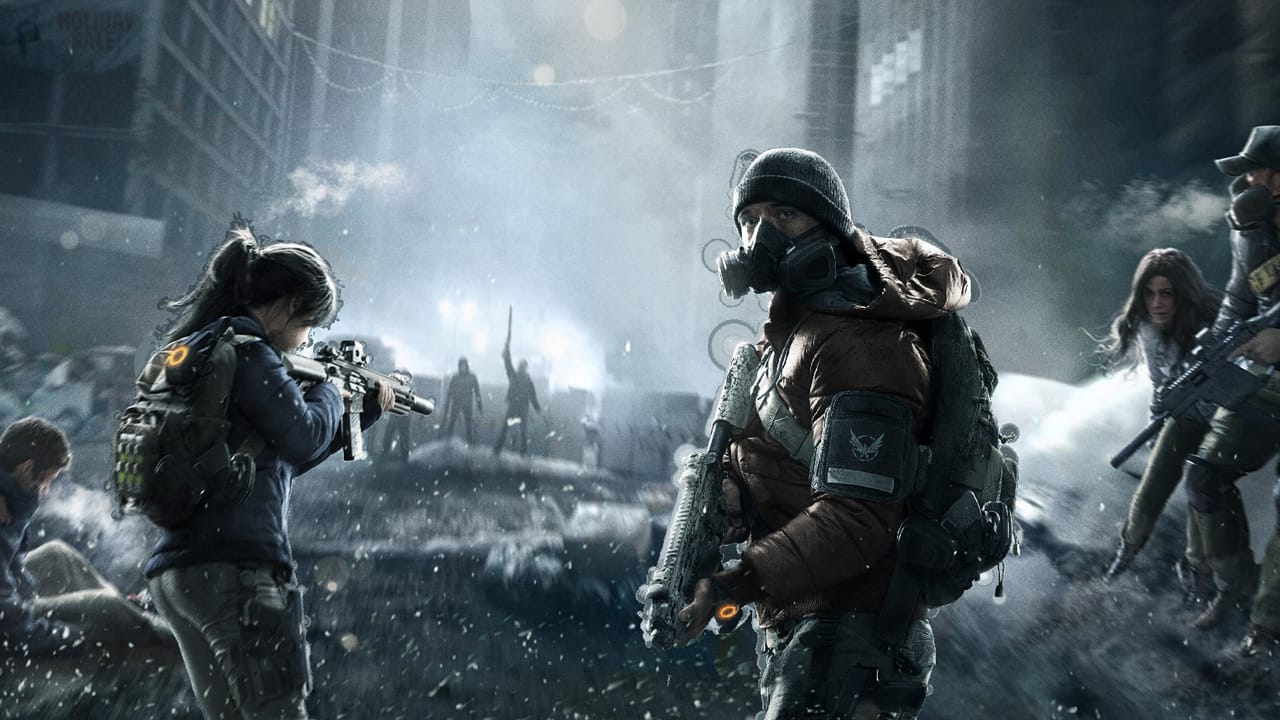
What makes The Division particularly interesting for a TTRPG is the contrast between the original medium and what roleplaying allows. As a video game—especially as a first-person shooter—it’s naturally focused on actionand specific gameplay loops. But the world itself is much richer than that.
A tabletop RPG removes those limits entirely. It opens the door to deeper storytelling, moral choices, human drama, and a much wider range of situations and playstyles. There’s a lot of narrative potential in The Division—whether it’s survival, rebuilding communities, or navigating tension between factions.
For us, it wasn’t just about adapting a game, but about unlocking everything the universe makes possible once you give players true freedom. That’s where we felt there was real value.
Ubisoft
What led to the decision to release games internationally? Arkhane has primarily worked in adapting other games into French in the past.
Saintout: When you partner with a company like Ubisoft, you think big from the start. An international release wasn’t an afterthought—it was part of the plan from day one.
Of course, we will publish a French version for our existing audience, who have supported us for years. But The Division is a universe deeply rooted in American culture, both in its setting and its themes, so it made perfect sense to develop a full English edition and speak directly to that audience.
It’s also a natural step for Arkhane Asylum. We’ve built strong experience through localization and publishing in France, and this project is an opportunity to expand beyond that and reach a broader international community.
More than anything, we want to bring something meaningful to players worldwide—not just a video game adaptation, but an RPG designed from the ground up to resonate with an international audience.
This is not a project in development—we’re presenting a finished game, ready to be played. The Kickstarter will function as a preorder and a great way for us to connect with a new audience, especially in the US. We plan to begin production immediately after the campaign, with delivery just a few months later. We’re excited to get the game into players’ hands as quickly as possible.

Whether you’re a designer, content creator, or just the biggest fan at your table, TTRPG Insider delivers in-depth reporting, original interviews, and regular roundups of the news that you will not find anywhere else. Let us help you become the best designer, player or dungeon master at your table.
Subscribe now to gain the advantage you want in this exceptional hobby and industry.

Ubisoft
How would you describe The Division TTRPG? Is it a tactical game of combat? More oriented toward heavy story and improvisation?
Saintout: I’d describe The Division as a fast-paced, high-intensity action game, with a system designed to be quick, efficient, and engaging at the table.
But it’s more than that. At its core, it’s a game about human relationships in the middle of chaos.
One of the key questions that guided us during development was: what actually makes a society? When everything has collapsed, what do you need to rebuild it? Laws? Institutions? Symbols? Trust?
The game is built to support both sides of that experience. On one hand, you have tense, tactical missions where every decision matters and every second counts. On the other hand, you have moments of interaction, negotiation, and difficult choices that shape how your group fits into the world.
Players are not just surviving—they are actively trying to rebuild something meaningful. Whether that means securing resources, helping civilians, or stabilizing a neighborhood, their actions have real consequences.
Ultimately, The Division RPG is about balancing pressure and purpose: operating in a world on the edge, while trying to bring it back from collapse.
What does gameplay look like?
Saintout: The Division RPG is built around a custom system called GRIS—short for Gather, Roll, Indicate, and Succeed—which uses a pool of d10s.
At its core, the system is designed to be fast and intuitive. Each action relies on a Skill, that grants you between 1 to 4 d10s (sometimes 5, if you have a Specialization). Once you’ve gathered your dice poll, just roll and keep one of them, which will become the Resolution dice. Only this one counts to beat the difficulty set by the Coordinator (the Game master). If the result exceeds the difficulty, the player can also trigger narrative and mechanical bonuses.
This makes it easy to learn, quick to read at the table, and very efficient in
play. On a personal level, I’ve never been a fan of overly complex systems. I enjoy rolling dice as much as anyone, but I don’t want to spend ten minutes resolving a single action. For me, that breaks the narrative flow—especially in a game like The Division, where every second matters. I wanted a system that keeps the pressure on, allowing the Coordinator to maintain tension without constantly stopping to check rules or edge cases.
Character progression is handled through a combination of the Skill Tree and the Agent’s equipment and abilities. Specialized gear, including SHD tech, plays a key role in defining how each character operates in the field.
Another important aspect of the system is the squad. We introduced a cohesion mechanic that reflects how effective Agents are when operating as a unit. The more they work together and build trust, the more abilities and advantages they can unlock as a team, emphasizing coordination and group play.
The game is also flexible in how it’s played. It works perfectly in the theater of the mind, but for groups who enjoy a more tactical approach, we support battle maps, tokens, and miniatures.
Ubisoft/Arkhane Asylum
How does this fit into The Division's lore? Is it expanding beyond NYC and DC, or is it also focused on the game's villains and characters?
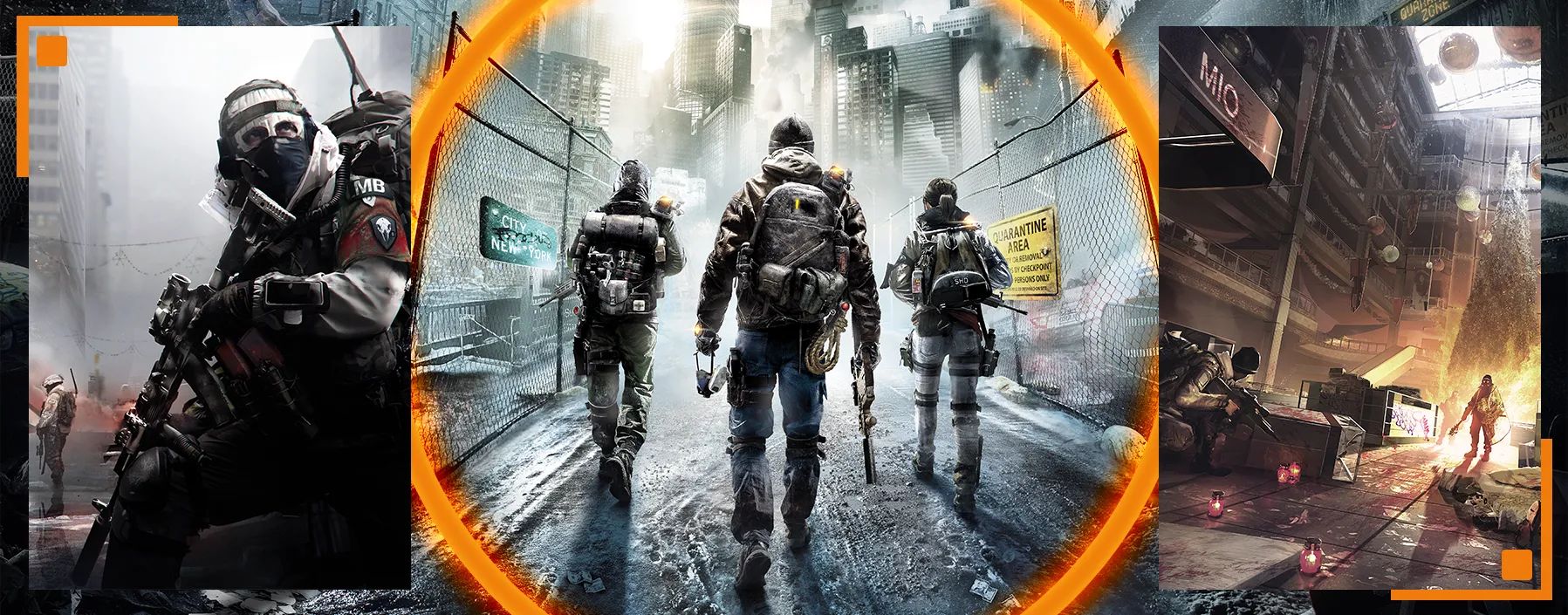
Saintout: The RPG takes place during the events of The Division 1 and The Division 2. The Starter Set begins right at the onset of the pandemic, with the activation of your agent in those first chaotic days.
From there, the story truly belongs to each group. Every table develops its own narrative, shaped by the players’ choices and actions.
All of the game’s content is developed in close collaboration with Ubisoft, who validated all our work to ensure it fits within the official canon of The Division. At the same time, the goal isn’t to replay the key events of the video games—they already do that extremely well.
What a tabletop RPG brings is something different: the ability to truly live in that universe. It allows players to explore their own stories, make their own decisions, and experience the world from a new perspective.
Players may encounter familiar faces in official scenarios, but their journey remains their own. In a way, it’s like having your own instance of the game—set in the same world, but driven by your own actions and choices.
Who is this game for?
Saintout: A game like The Division RPG naturally speaks to multiple audiences.
First, of course, to fans of the video game. Many of them have already spent hundreds of hours in that world, and this is an opportunity to go further—to create their own missions, explore areas the video game doesn’t cover, and focus on the aspects they enjoy the most. If they love exploration, they can build their experience around
that. If they’re more interested in interacting with civilians or shaping communities, they can do that too.
At the same time, the game is very much designed for tabletop RPG players. While there are many post-apocalyptic RPGs out there, The Division offers a different core experience. It’s not just about surviving in a broken world—it’s about rebuilding, striving for something better, and trying to save what can still be saved from society.
We also made sure the system is accessible enough for newcomers. It draws inspiration from video game design,with elements like the Skill Tree web that make progression intuitive even for those who have never played a TTRPG before.
Finally, the game was designed to support a wide variety of playstyles—from high-intensity action missions to more diplomacy- or story-driven scenarios. Every group can shape its own Division unit to match the way they want to play.
Thanks to Arkhane for speaking with us! The Division TTRPG’s Kickstarter page is currently available for review. The campaign is expected to launch in June 2026.
Disclosure: Arkhane provided TTRPG Insider with a copy of the quickstart and its Starter Set for review.
What are your thoughts? Send any scoops, tips or press releases to [email protected].