- TTRPG Insider
- Posts
- IDW Aims to Make Kaiju-Sized Impression With Godzilla The Roleplaying Game
IDW Aims to Make Kaiju-Sized Impression With Godzilla The Roleplaying Game
IDW Games makes its big return to tabletop gaming with Godzilla: The Roleplaying Game, a card-based kaiju TTRPG experience featuring superpowers and monster combat.

Christopher Hutton
February 25, 2026 • Estimated Reading Time: 5 minutes
Welcome to TTRPG Insider!
We’re the go-to source for exclusive interviews, analysis, and writing on the TTRPG industry, from Dungeons and Dragons to independent RPGs and everything in between.
If you want to know more, check us out here! If you like what you’re reading, make sure you subscribe.
Today is an interview I am beyond excited for. I got to talk to IDW Games’ team at PAX Unplugged about Godzilla: The Roleplaying Game. It’s the first TTRPG from the comic publisher, and the division’s first big initiative after closing four years ago.

IDW Games
IDW Comics, the publisher known for Sonic the Hedgehog, Ghostbusters, and Teenage Mutant Ninja Turtles, is returning to tabletop gaming in 2026 with the release of Godzilla: The Roleplaying Game.
IDW is best known for its comics, but has been playing with tabletop gaming for quite a while now. The company launched its tabletop division in 2013 and released multiple games based on its IPs. The projects struggled to gain momentum, leading IDW to announce in 2021 that it was exiting the tabletop gaming business.
Four years later, IDW decided to revive its tabletop gaming efforts with something it had never made before; a TTRPG.
“I think we're just ready,” IDW Games manager Ellen Boener told TTRPG Insider. “We were really sad to move away from games. But everyone was really excited about finding a way to bring [IDW Games] back, and I think TTRPGs is just a new approach for us that we’re excited to do.”
Publishing TTRPGs is also something IDW is somewhat familiar with, since it is a book-focused format. “Books are our bailiwick,” Boener added. “It’s what IDW does for a publishing company.”
Bringing Godzilla to the Table
IDW Comics
Godzilla: The Roleplaying Game was designed by former Warhammer game designers Jervis Johnson, Mark A. Latham, and Gav Thorpe and will be the second project that this new version of IDW Games is launching. IDW partnered with Hunters Entertainment in November 2025 to crowdfund a Beneath the Trees Where Nobody Sees story game, based on the dark comic about serial killers and anthropomorphic animals.
The Godzilla IP is a longstanding property for IDW. The company acquired the rights to publish Godzilla comics in 2011 and has released multiple versions of the setting.
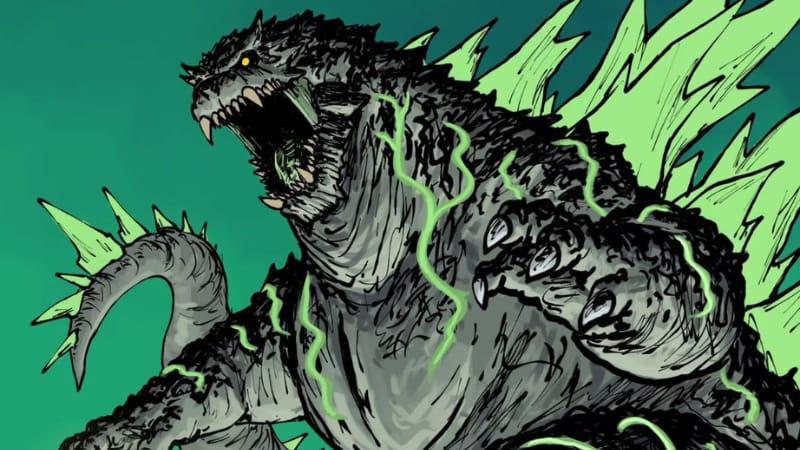
Godzilla: The Roleplaying Game is built around the Kai-Sei era of Godzilla, a distinct version of the kaiju introduced in IDW’s comic adaptationss in 2025. The comics describe a post-apocalyptic world with Pacific Rim-inspired elements, where the very existence of kaiju and Kai-Sei energy has mutated the world, forcing governments to form anti-kaiju organizations to protect cities and stop these unstoppable monsters from decimating millions of lives.
Players won’t get to play as the iconic kaiju, however. They’ll play as “fighters, survivors, potential worshippers of the kaiju who have acquired special abilities via Kai-Sei energy that lets them take on the kaiju.”
The game takes on a strong superhero element, where characters can grow in size ala Ant-Man/Ultra Man to duke it out with Godzilla, use massive sci-fi drills to punch through stone, or fire sniper shots from miles away. It’s a very different universe than you might expect from recent WBD film adaptations or even the classic Japanese films (although Boener re-emphasized that storytellers can easily adapt the game to these older settings if they want to).

Whether you’re a designer, content creator or just the biggest fan at your table, TTRPG Insider delivers in-depth reporting, original interviews and regular roundups of the news that you will not find anywhere else. Let us help you become the best designer, player or dungeon master at your table.
Subscribe now and find your next favorite game.
Hands-On Experience With Godzilla: the Roleplaying Game

I got to try Godzilla: The Roleplaying Game at PAX Unplugged in late November 2025 in an early playtest1 . The core story of the playtest featured a team of G-Force operatives going to a base in the middle of the now-decimated Central United States that had gone quiet. Something bad happened there, and the players had to find out what.
Gameplay relies entirely on card draws instead of dice. Players will first pull together an appropriate modifier from the four basic character stats of Strength, Mindfulness, Intelligence, and Coordination. Players will then try to add any and all hooks or equipment that they have to that core stat. Players will also have “Destiny Cards", which are cards in hand that they can use to influence the outcome of a situation. They will then draw a card from the “Chance Deck”, which might increase or subtract from the final roll depending on the color of the card. The storyteller then reviews the number and determines if it is enough. It’s a very simple approach to gameplay that felt natural after 30-40 minutes.
The gameplay adopts a macro approach to movement and momentum. While most D&D fans assume actions in the standard 5-foot-square grid, player actions instead occur on a larger scale per turn. Each character was asked to take one major action per turn as the story progressed. For example, my character (a burly, brawny type with big drills he used to fight the kaiju that changed his life) used his skills to yank open a large metal door while others tried to find evidence of what caused all of the people at this base to disappear.
At the end of the turn after everyone has played, the game’s storyteller will draw a card and increase the “Crisis Clock”, a metric that will determine if and when bad things will escalate. Each bad event is set at a specific number. Once you hit that number, a bad thing happens. It maintains tension and keeps gameplay moving. These could include the arrival of a kaiju, the sudden awakening of a previously unknown threat, the weakening of a structure, or whatever a storyteller might imagine.
The way turns are organized encouraged teamwork and collaboration at my playtest, and made the experience feel like an operation. We were on a clock and had to get things done. The mechanics aren’t too buried in a lot of specifics, which lets players get creative in what they might try to do. Some solutions may have been a bit sillier than others, but they were approved by the storyteller at the end of the experience.
I still have many questions about the game after this experience. What does gameplay look like outside of operations? How does character progression work? What tools are available to storytellers to maintain escalation and keep things interesting?
The biggest question was around the sense of success. If players aren’t able to kill Godzilla, how do you keep them invested and wanting to return (and possibly fight Godzilla again)?
One factor that I found to be an interesting and consistent part of the game’s design is your inability to actually kill kaiju. As a storyteller, I was always told that if you gave a character a stat block in something like D&D or Pathfinder, then it meant that you had to be ready for the possibility that players might kill that character. It’s (partly) the reason you don’t see stats for gods. While Godzilla does provide stats for the iconic kaiju contained within the setting, Boener says you’re only ever to drive them back or stop them from whatever malicious actions they may be enacting within the location you’re operating. Part of that is reinforced in the game’s decision to use willpower as the in-game health metric over actual health. If you bring Godzilla down to 0 willpower in an encounter, that doesn’t mean you killed him; just that you’ve stopped him from continuing his rampage this time around.
“You are fighting a force of nature,” Boener told TTRPG Insider, “It could come back.” That’s why she urges players to shift their goals away from “kill the bad guy” toward different metrics of success. These could be protecting a location, building a wall or weakening the kaiju for good. There might also be other reasons that Godzilla attacks. In many past Godzilla films, the kaiju often attacked an area because something dangerous was there. Maybe another kaiju was in the area, maybe scientists were experimenting with something they shouldn’t. That could equally be at the core of the story. How well the game provides resources for this sort of gameplay remains to be seen.
There’s still a lot I want to know about this game, and many questions about player response. Will it resonate with TTRPG fans? What about kaiju fans?
For now, we’re waiting to learn more about the game in its release.
Thanks to IDW Games for speaking with me! Godzilla: the Roleplaying Game will be available for crowdfunding on March 3, 2026.
What are your thoughts? Send any scoops, tips or press releases to [email protected].
1 The game has likely changed in some manner since I played, so keep that timing in mind while reading my experience.